A shared way to evaluate experiences
Developing a structured approach to heuristic evaluation
- Focus
- Design operations, experience evaluation and reusable practice
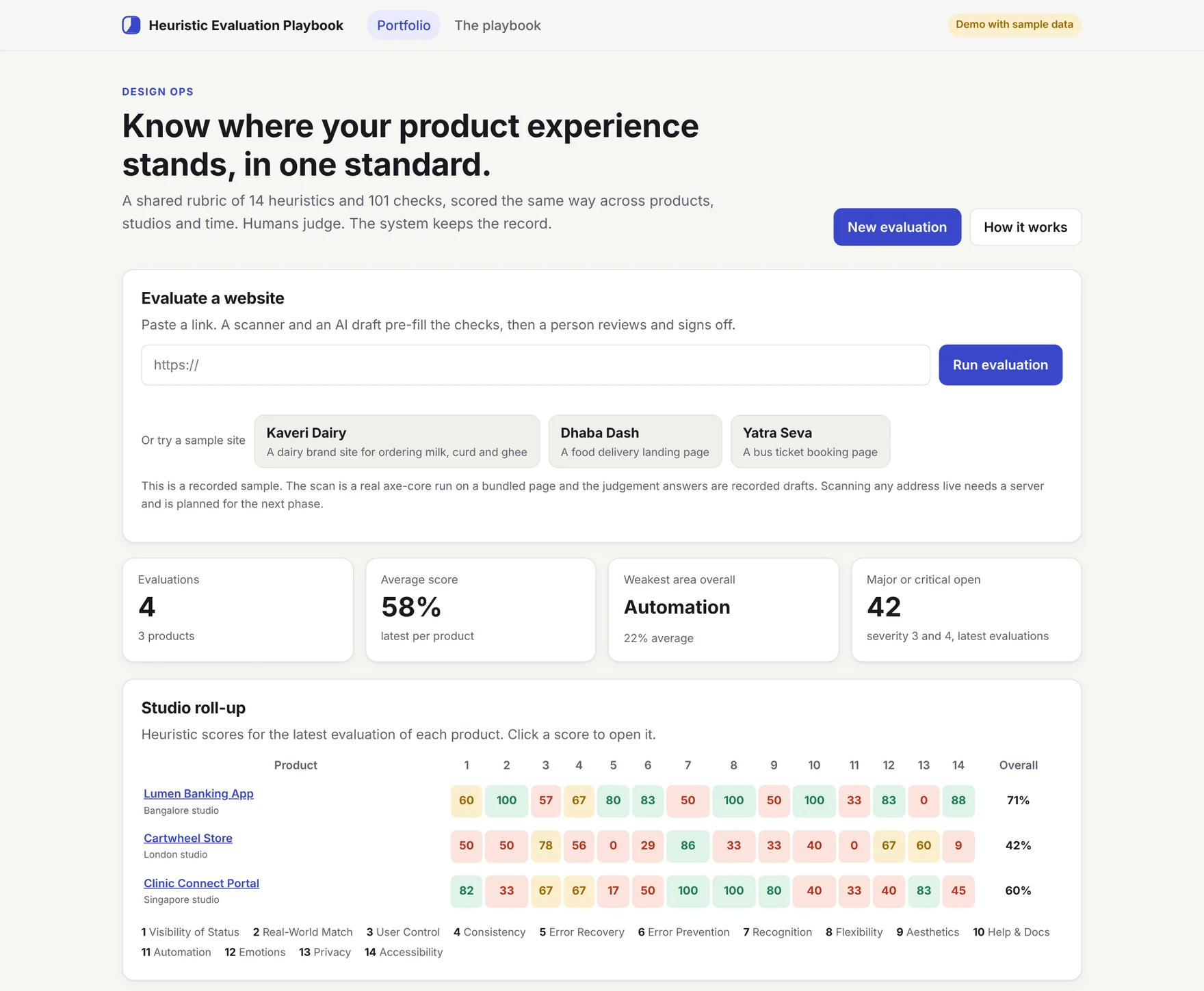
A working demo with fictional sample data. Nothing you enter leaves your browser.
Heuristic evaluation depends a lot on who is doing it. Two designers can look at the same product and come back with observations that are hard to compare or turn into action. Without some shared structure, evaluations are difficult to repeat. The opportunity at Designit was a more consistent approach that designers could use across products, engagements and studios.
At Designit the practice lived in an Excel sheet: a heuristic evaluation template, with the checks in it. I wanted that to be a structured starting point for assessing product experiences, easier to pick up and repeat while keeping professional judgement in it. Instead of a pile of subjective observations, designers get a shared frame to say what is wrong and why.
What interests me here is practices that outlive the person who made them. A shared way of evaluating helps communication, makes assessment more consistent and passes knowledge between teams. It should also help designers build their own judgement, rather than follow a checklist.
What interests me is practices that outlive the person who made them.
A small working demo
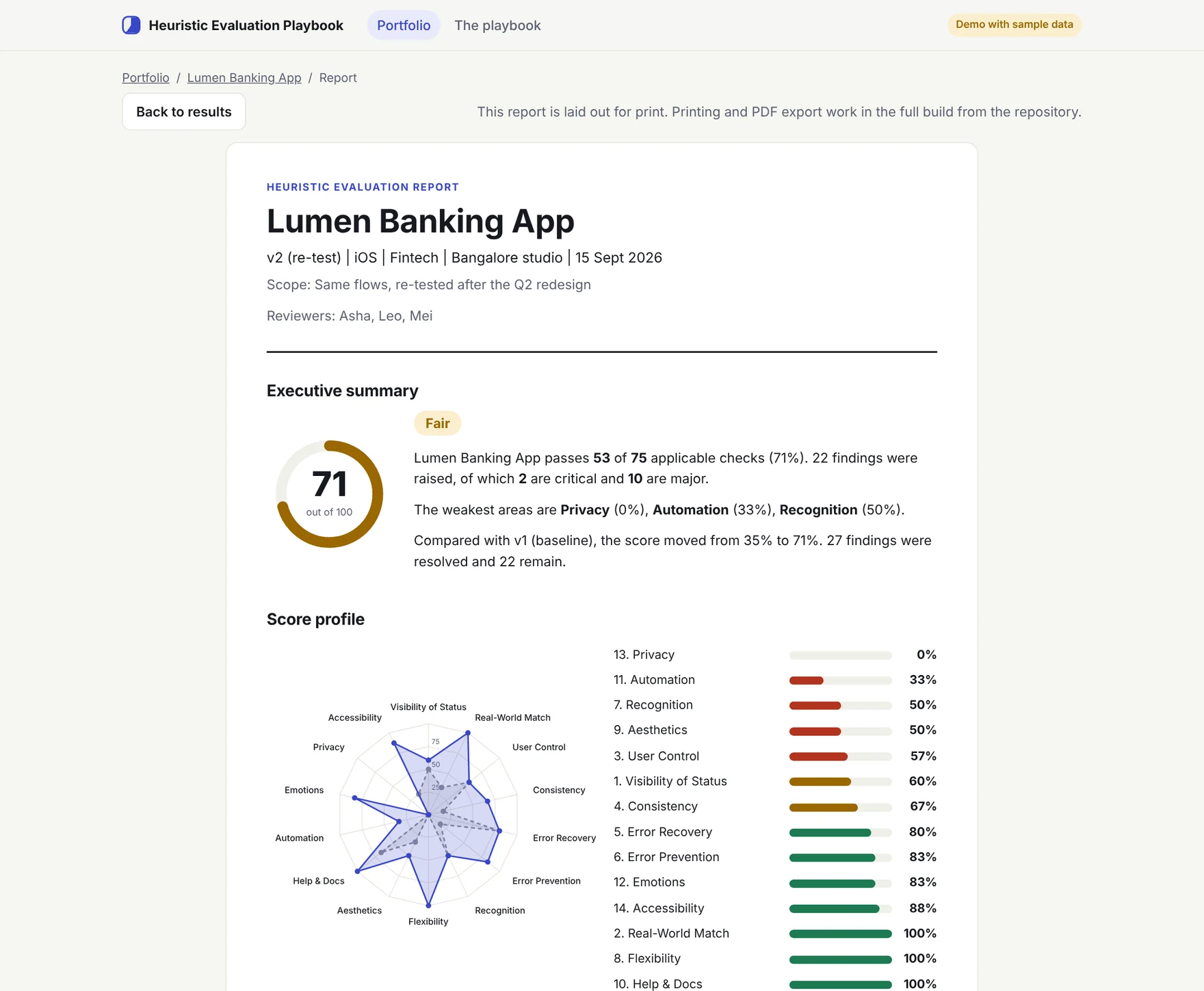
I have since turned that sheet into a small working tool, built in Claude Code, so the idea can be tried and not only read. It holds 14 heuristics and 101 checks, scores an evaluation, ranks the findings by severity and compares one version of a product with another. The demo runs on three fictional sample sites. They are made up for the purpose and are not real products.
It's organised way of thought process, he breaks complex parts to smaller part and brings the missing pieces together before making any judgements.
Attention to detail. In some scenarios, a bit too much and not required 😜
What I am not claiming
That the tool or the sheet was adopted across studios, that it became a company framework, or that it measurably improved anything. I do not have that evidence.
A reusable evaluation approach. Adoption and impact are not claimed.